What your microbiome really needs
The conversation around gut health gets loud quickly. Probiotics, strains, diversity, fermentation, butyrate. Yet a growing body of research keeps pointing back to something fundamental: what is eaten matters. Not as a blanket recommendation, but as a measurable mechanism.
A recent meta-analysis offers concrete answers to that question. It also corrects a widespread oversimplification.
What the meta-analysis shows
Mao et al. (2024) published a methodologically rigorous meta-analysis of randomized controlled trials in Critical Reviews in Food Science and Nutrition. The focus: how do polyphenols affect the gut microbiome and inflammatory markers in people with overweight or obesity?
Study quality was assessed using the GRADE standard, one of the most stringent evaluation frameworks in evidence-based medicine.
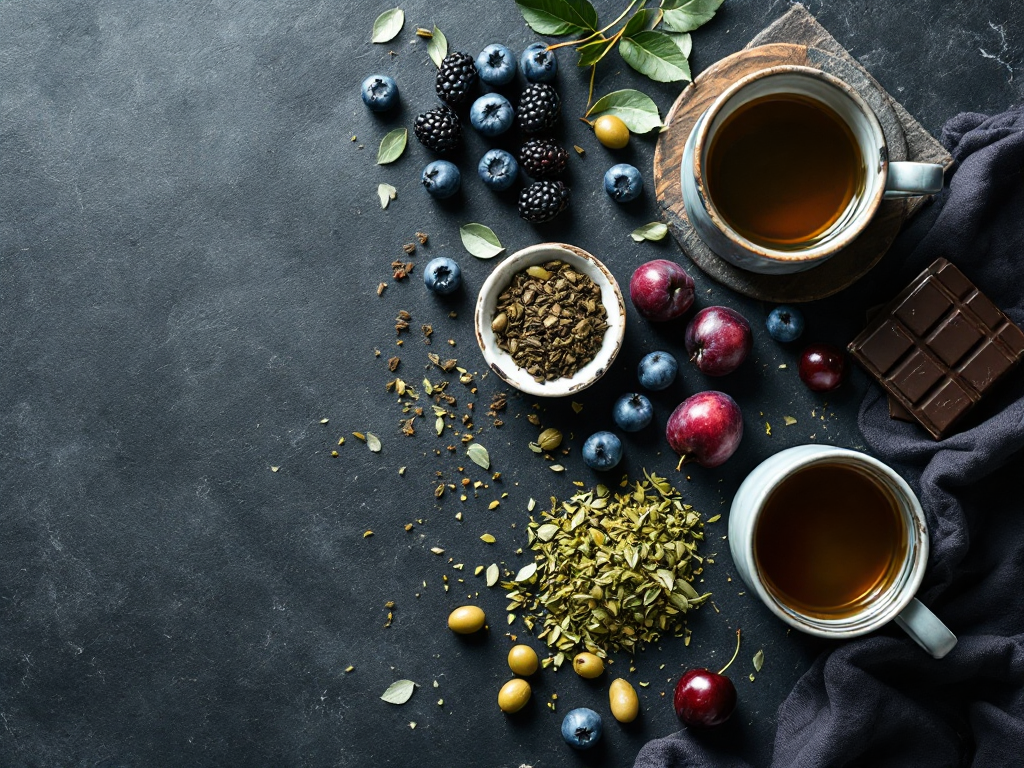
Participants consumed an average of around 452 mg of phenolic compounds per day over a period of approximately five weeks. The sources: berries, tea, pomegranate, and olive oil.
The findings
The polyphenols shifted the composition of the microbiome in a measurably favorable direction. The proportion of unfavorable bacterial strains declined, and the ratio of major bacterial groups improved.
Particularly relevant is the inflammation finding. The analysis showed a significant reduction in circulating lipopolysaccharides, or LPS. LPS are components of the outer membrane of gram-negative bacteria. When the gut barrier is permeable, they enter the bloodstream and trigger chronic, low-grade inflammation. Lower LPS levels in the blood point to a tighter, more functional gut barrier.
This is not a marginal effect. Chronically elevated LPS levels are associated with metabolic dysfunction, insulin resistance, and systemic inflammation. A reduction in this marker after five weeks of polyphenol intake is a measurable signal.
The nuance that often gets told wrong
Here is where things diverge from a common claim.
In this analysis, polyphenols did not significantly increase the production of short-chain fatty acids, including butyrate. Butyrate is the compound credited with most of the gut's protective effects: energy supply for colonocytes, barrier stabilization, and anti-inflammatory signaling.
Practitioners who have explained to clients that berries boost butyrate will not find support for that in this dataset over five weeks. Polyphenols shift the composition of bacteria. They do not automatically supply the fuel those bacteria need to produce butyrate.
For context: the evidence base is not uniform. Other meta-analyses do show increases in acetate and butyrate for certain polyphenol sources. That is precisely why a differentiated view is worthwhile. The blanket berries-equal-butyrate equation is a simplification that does not reflect the complexity of the system.
The two-step approach that actually makes sense
The evidence points to a logical structure. Two steps that belong together.
Step one: Polyphenol-rich foods
They shift who lives in the gut. Favorable bacterial strains gain ground, unfavorable ones lose it. Good sources: blueberries, strawberries, raspberries, cherries, plums, apples, spinach, artichokes, olives, beans, dark chocolate, coffee, and tea.
Step two: Resistant starch and soluble fiber
The shifted bacteria need fuel. The most important fuel for butyrate production is resistant starch. It passes through the small intestine undigested and is fermented only in the large intestine. Good sources: green bananas, beans, and cooked-then-cooled rice, pasta, or potatoes.
The two steps do not compete. They are the same strategy applied at different points in the system. Polyphenols shift the composition. Fiber feeds what that shift produces. Anyone who takes only one of the two steps leaves the potential of the other unused.
What we are getting at with SLOW
This is precisely where a holistic and at the same time precise approach to health consulting proves its value.
Holistic means: gut health is not a single lever. Composition and fuel belong together, and both are directly connected to inflammatory load, barrier function, and metabolism. Anyone who intervenes at only one point is not seeing the full system.
Precise means: the same serving of berries does not produce the same change in everyone. Starting microbiome and barrier function vary between individuals. Inflammatory markers tracked over time, LPS, high-sensitivity CRP, zonulin, say more than any blanket recommendation.
On the SLOW platform, health professionals translate exactly these data layers into recommendations that fit the individual. Not as a one-size-fits-all protocol, but as individually tailored guidance based on measurable markers and documented over time. From data to results.
How do you advise your clients on the interplay between polyphenols and fiber? And do you draw on barrier or inflammatory markers to track progress? Share your thoughts in the comments.
Source
Mao T, Zhang Y, Kaushik R, et al. Effects of polyphenols on gut microbiota and inflammatory markers in individuals with overweight or obesity. A systematic review and meta-analysis of randomized controlled trials. Critical Reviews in Food Science and Nutrition (2024).